DaBay – Citizen Science for Bavarian Dialect Research
A mobile-first citizen science platform for Ludwig Maximilian University of Munich, built around Silverstripe CMS in a highly constrained on-premises environment.
Introduction
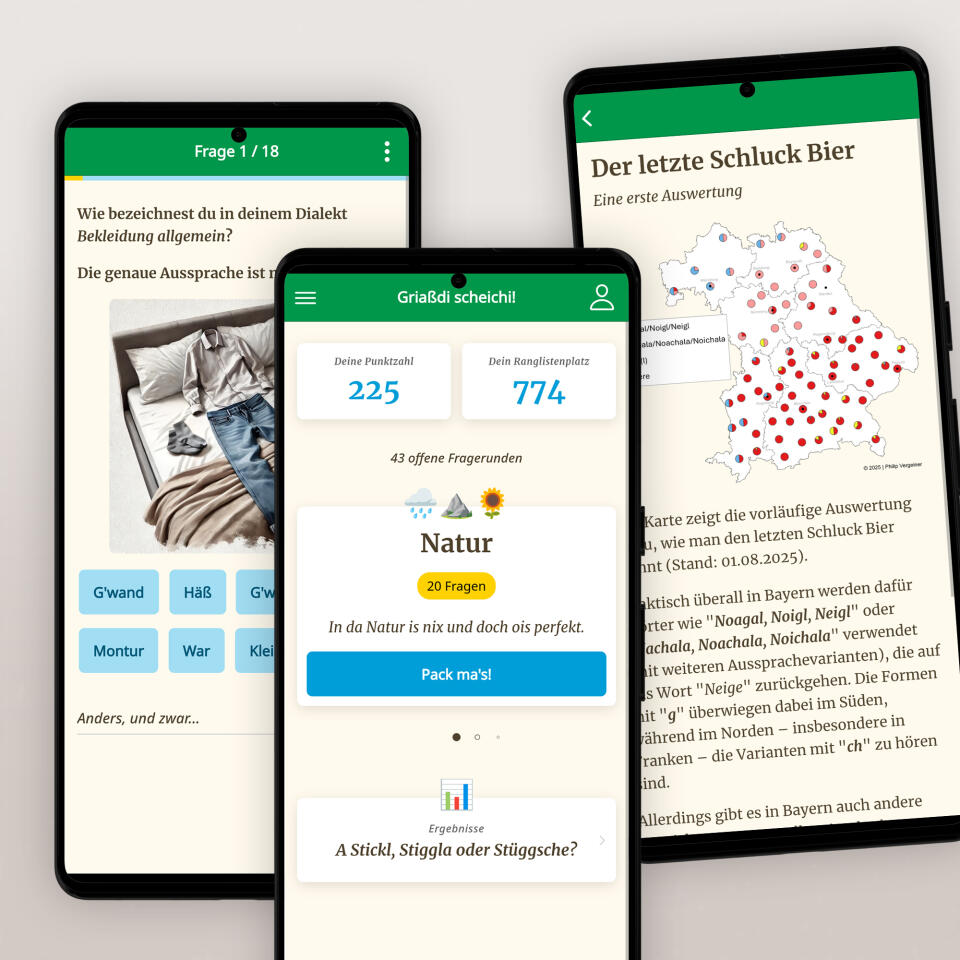
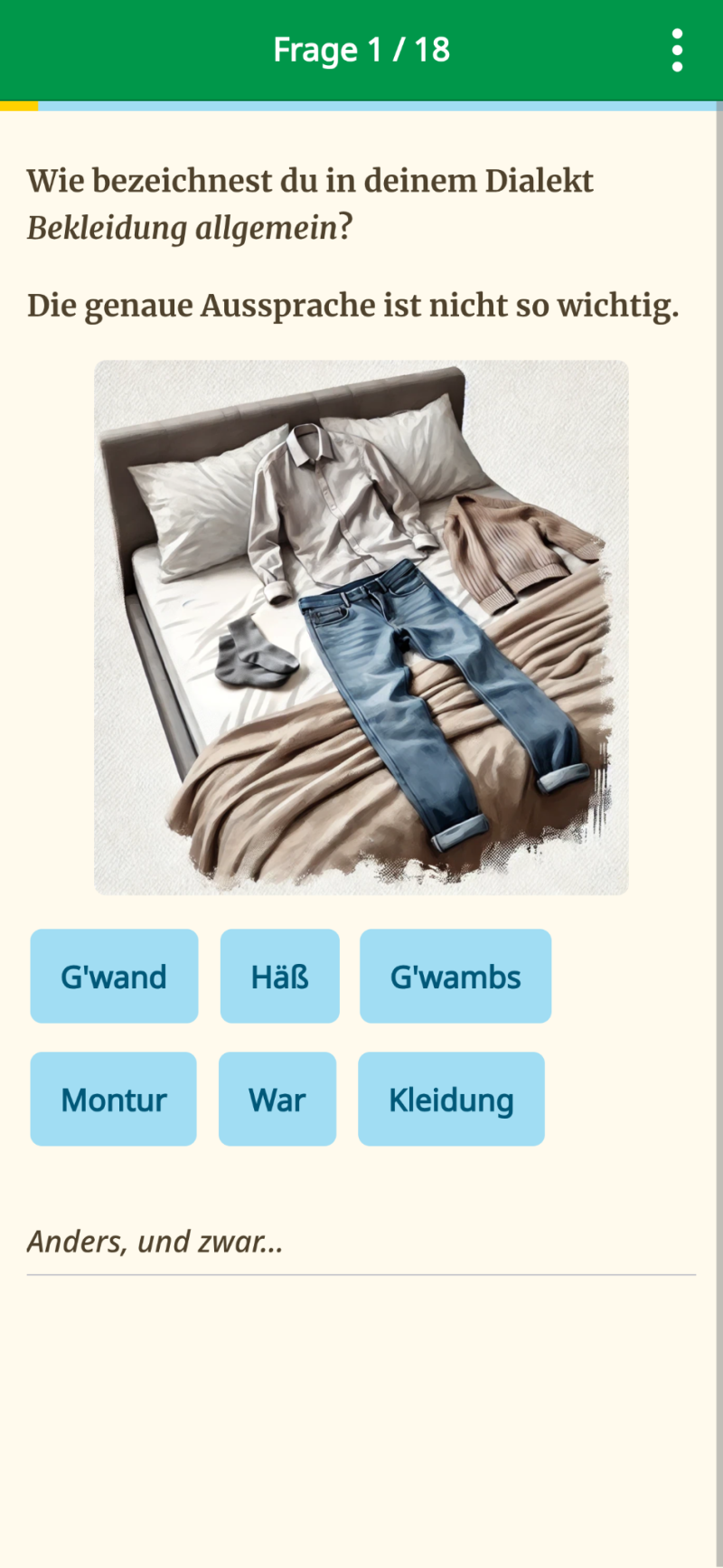
Instead of conducting linguistic surveys exclusively through traditional research methods, DaBay enables researchers to publish questionnaires and invite people throughout Bavaria to contribute directly from their smartphones. Questions can include text-based answers as well as audio recordings, allowing researchers to collect authentic examples of spoken dialect at scale.
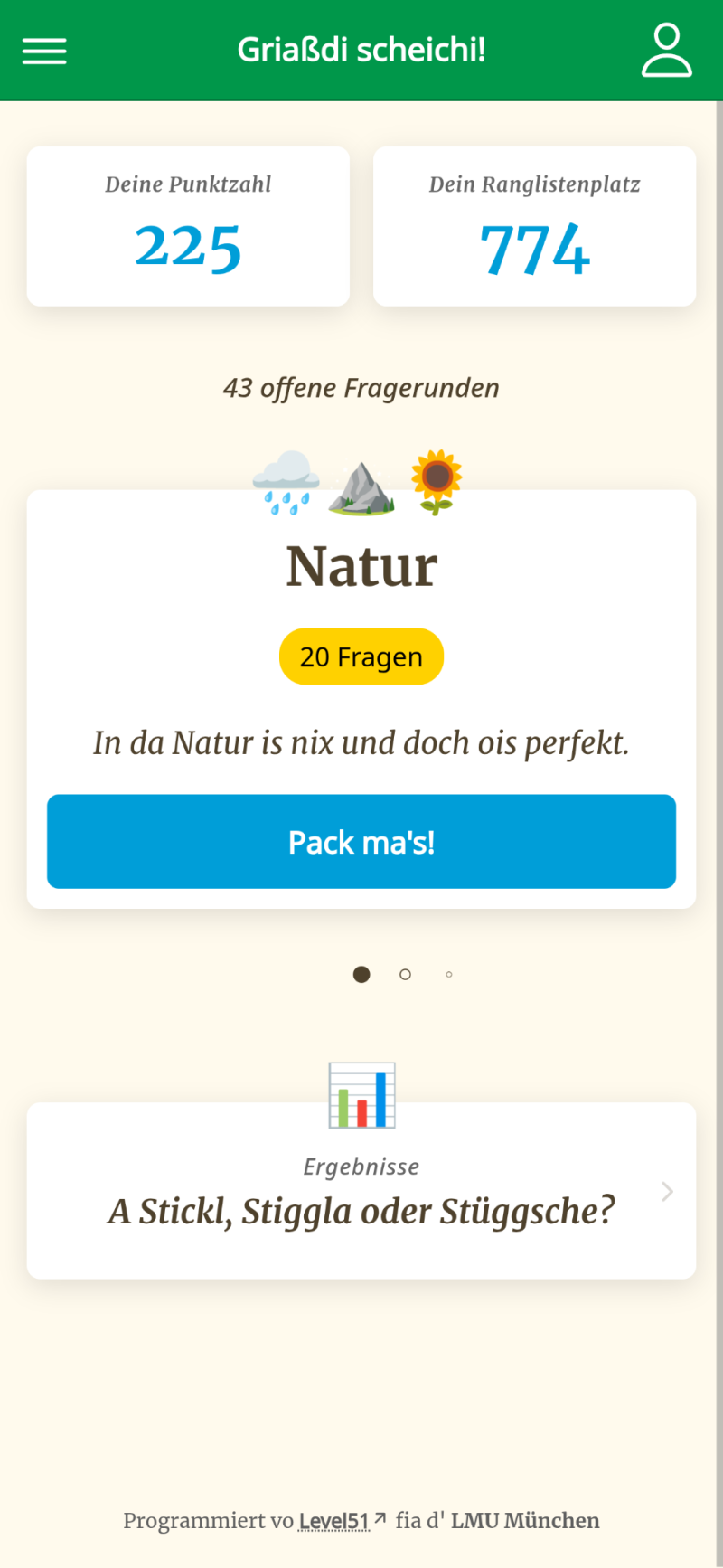
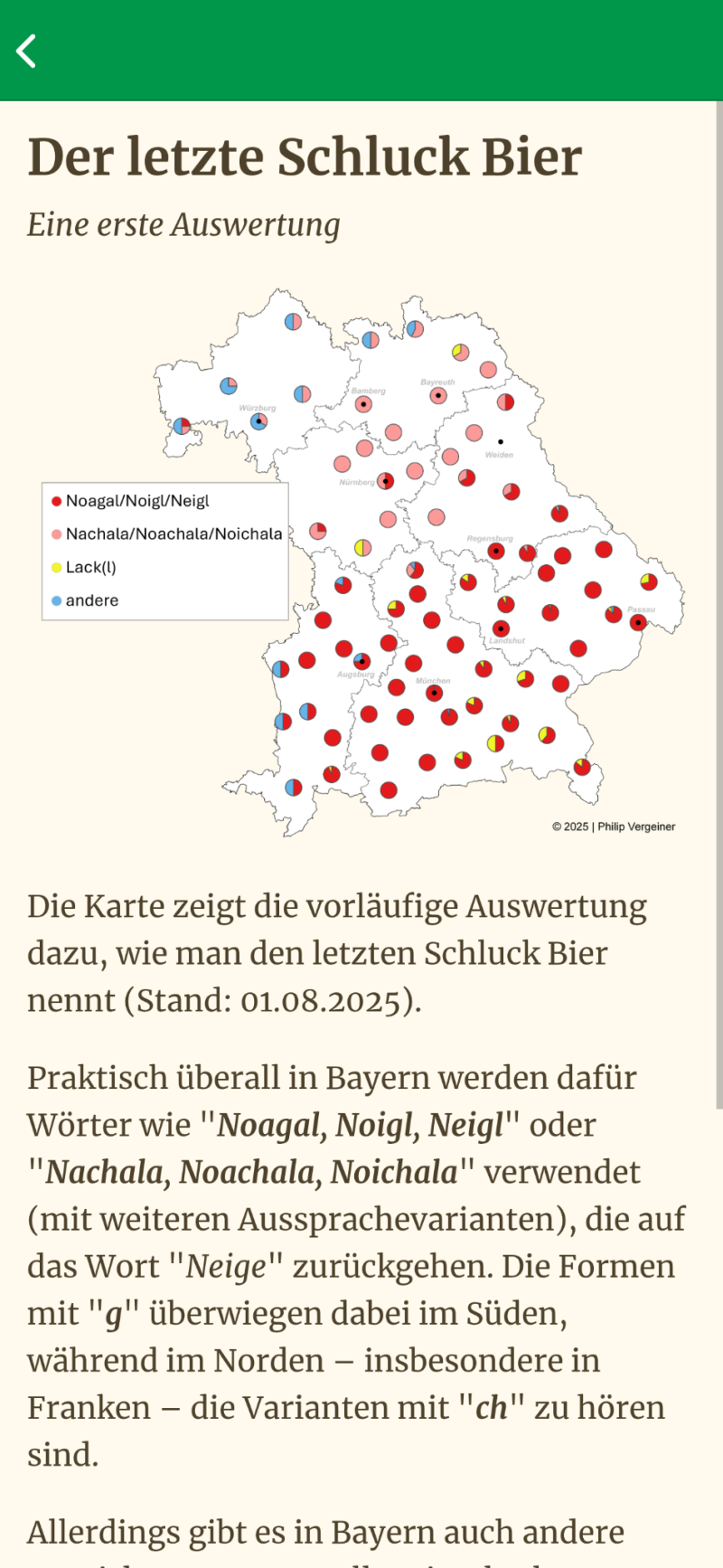
Beyond data collection, the platform was designed to keep participants engaged: users can learn more about the Bavarian dialect, see research results, collect points and compete in a monthly leaderboard.
Challenge
From a user perspective, DaBay had to feel like a modern consumer application. For the research team, however, it also needed to be a flexible content and data management system that non-technical university staff could operate independently.
This combination already made the project more than a conventional website. Researchers needed to create and configure different types of questions, publish editorial content and manage the underlying research data, while the application had to provide a highly optimised mobile experience.
The technical environment added another layer of complexity.
LMU required the application to run on its own infrastructure and prohibited several third-party cloud services initially considered for the project. Services such as AWS S3, Amazon SES and Firebase therefore had to be replaced with solutions that could operate within the university environment. Server access was restricted through the university VPN, email delivery had strict limits, and there were no suitable university-owned Apple or Google developer accounts for distributing native applications.
The challenge became not simply to build the desired product, but to retain the qualities of a modern application architecture within these constraints.
Solution
Silverstripe CMS became the central application and content management layer of DaBay.
Rather than treating Silverstripe purely as a website CMS, we used its framework capabilities to model the domain of the research application and build a purpose-specific administration interface around it. Researchers can manage questionnaires, question types, editorial content and other application data through an interface tailored to their workflows.
This was particularly valuable because the people maintaining DaBay are researchers rather than developers. Silverstripe's flexible data model and extendable CMS allowed us to expose complex application structures through comparatively simple editing interfaces.
For more specialised requirements, the CMS was extended beyond its standard fields and forms. A custom emoji field, for example, provides a simple editor interface for content that is later presented inside the application. More importantly, a dedicated mini application was integrated into the Silverstripe administration area for configuring complex questionnaires. This gives researchers a purpose-built interface while retaining Silverstripe as the central point of administration.
The public-facing application was implemented as a mobile-first web application. This removed the dependency on Apple and Google developer accounts while still providing an app-like experience directly through `dialektapp.bayern`.
Several cloud components of the original architecture also had to be reconsidered. Files are stored directly on LMU infrastructure instead of object storage such as S3, and transactional email is sent through the university's own SMTP infrastructure. User authentication and application-oriented real-time functionality were implemented with PocketBase as a lightweight, self-hosted alternative to Firebase.
The resulting architecture follows a CQRS-style approach: the editorial and administrative side of the system is separated from the data structures optimised for interaction with the end-user application. Silverstripe remains the authoritative management layer, while specialised components can serve the requirements of the mobile application without forcing the CMS itself to fulfil every real-time use case.
Deployment was integrated into GitLab CI despite SSH access to the production environment being possible only through LMU's VPN. Deployment jobs therefore establish the required VPN connection automatically before accessing the university infrastructure.
The result is an architecture made almost entirely from self-hosted, open-source components while retaining the development workflow and user experience expected from a contemporary web application.
For DaBay, Silverstripe proved particularly valuable not because it supplied every component of the stack, but because it provided the flexible foundation around which those components could be organised. Its combination of ORM, framework, extensible CMS and custom administration interfaces made it possible to bridge two very different worlds: a sophisticated citizen-facing application and an approachable research tool for university staff.
About the Agency
Level51
We are Level51, a team of lateral thinkers that has come together to form a small software studio in the middle of the Bavarian Forest. With great attention to detail, we work on mobile apps, web applications and desktop systems - always on the hunt for new trends and technologies.
- Ulrichsberger Str. 17, 94469 Deggendorf
- Contact: Julian Scheuchenzuber
- E-mail: hallo@lvl51.de
- Phone number: +49 (0) 170 310 15 49
- Website: https://lvl51.de/